Published in The Arkansas Traveler
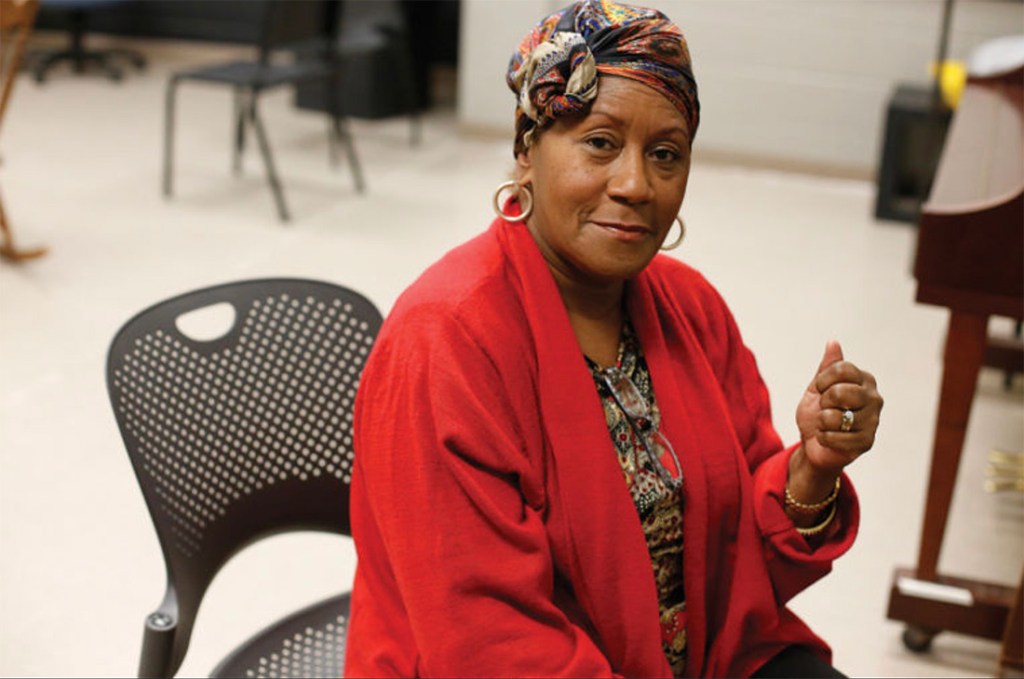
On an afternoon in May of 1967, not long after most Little Rock Central High School graduates had proudly accepted their diplomas, Betty Anderson stood at the top of the steps in front of her alma mater.
Anderson had taken her all-white cap and gown and drug the attire down and up the steep front steps of the school, then folded them neatly and put them back into the box for return. The trials and tribulations she underwent while in high school were not worth integrating into the school system almost seven years earlier, she said.
“I was then, and still am, a work in progress,” the backstory for her autobiographical play reads. “I didn’t return to those steps until my daughter, Maliaka, became a student there approximately 20 years later. For sure, a lot had changed by then.”
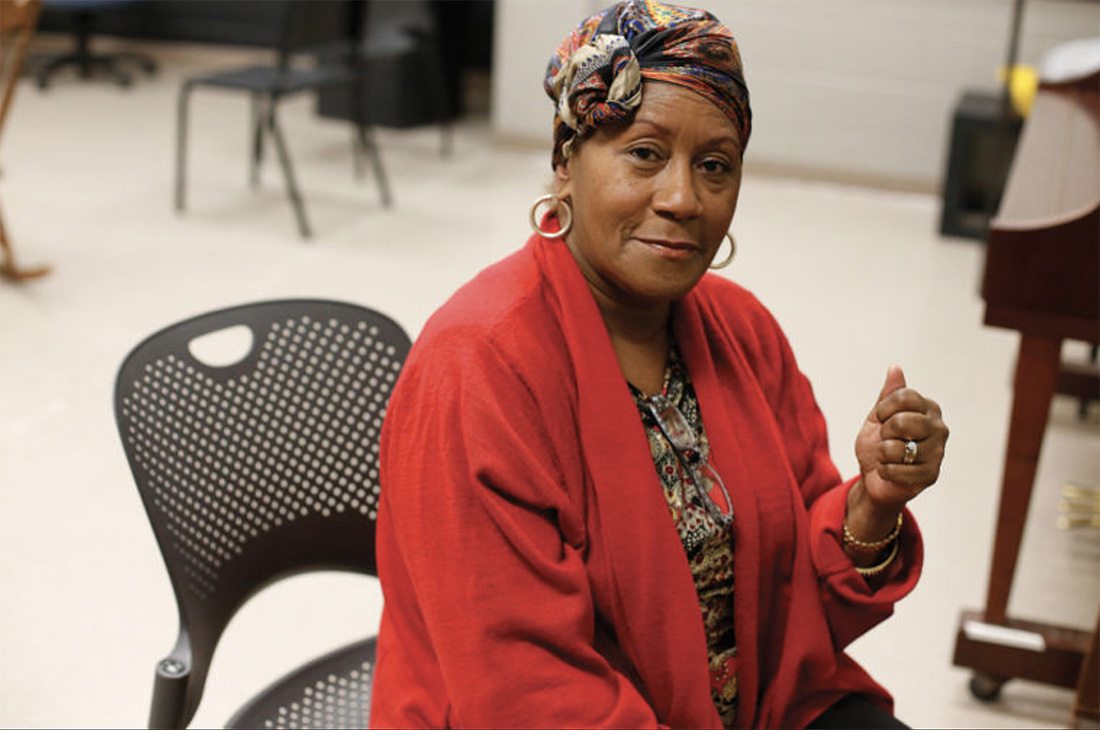
Anderson, now 64, has spent the last 30 years revisiting people and places from her past, and sometimes that includes revisiting periods of racial oppression. When she isn’t volunteering at the Walton Arts Center in Fayetteville or spending time with her family, she’s likely on the University of Arkansas campus, where she is working on her master’s degree in theater and a three-part play called “Out of One Blood,” based upon those experiences beginning in junior high.
She calls the first part of her play “Here’s to West Side,” which pays a tongue-in-cheek homage to the junior high school into which she integrated. In 1961, just four years after the racial integration of LRCHS in 1957, Anderson and eight other black students stepped bravely into the halls of the junior high. At the time, Anderson didn’t feel like she was making any waves, but she did find importance in clearing a path upon which her younger sisters would one day walk.
“I still remember my daddy saying, ‘better books at West Side,’” Anderson said. “Which is true, but I didn’t want to go.”
Anderson wanted to attend Dunbar Junior High School, an all-black school, with her childhood classmates and neighborhood friends. But she passed the personality test administered to black student and teacher candidates for integration into white schools, and was pushed into a successful but difficult academic career.
The group of black students was split up among several classes. Though she had a couple of encouraging grade-school teachers, she had others who did what they could to make sure she didn’t excel beyond the white students in her classes. In one instance, a math teacher curved test grades so that her 96 percent grade on a test fell to a B.
“They set us up to fail,” Anderson said.
Another one of the nine integrated students who went on to high school with Anderson, Kenneth Jones, said he remembered one teacher consistently gave him bad grades, but he gave Anderson good grades. One day, Anderson came up with the idea to switch their papers, and she was given a good grade for Jones’ paper.
“We supported each other emotionally, psychologically, and academically. We did everything we could to build each other up,” said Jones, who is now the dean of student services for Shorter College in North Little Rock.
Anderson reminded him that he was not to blame for the problem, and that it was the teacher to blame because she could not overcome her personal prejudices against the boy.
Racial prejudice was an obstacle that Anderson faced as early as junior high school. After lunch one day, Anderson and a young white boy got into a fight on the school’s tennis court. It started as she was standing in a long line of antsy ninth graders waiting to go back inside and she mumbled sarcastically, “I just hope somebody kicks me.” As soon as she had, she felt a sharp pain in her back. Though both she and the boy were injured after the fight and the boy initiated the violence, she was sent home and the boy was taken to the doctor.
The entirety of the junior high group, along with a handful of other students who were the first to integrate into East Side Junior High School across town, went on to attend Little Rock Central High School. Thus begins the second part of her play: “Hail to the Old Gold,” which takes place at LRCHS.
Anderson’s love for the stage developed while in high school. As a member of the National Association of Colored Women’s Clubs, she competed in oratorical contests statewide and won awards for her speeches. She began networking a large group of friends through the club; for example, at an NAACP conference she attended when she was 16.
While at LRCHS, Anderson and two of her close friends, Myrna Davis and Rita Washington, got together and formed a musical group called “The Pearls,” for which they wrote musical numbers and sewed their own costumes. The singing group performed mainly at school talent shows – also being the first black students to perform in the school’s show.
In 1967, Walter Cronkite of CBS News interviewed her on national television for her achievements, which also included being the first black student to work in the school’s bookstore and being the first black student to direct the senior class play.
“I remember him asking me how it felt, and I said, ‘It’s almost over, and I actually am glad,’” Anderson said of Cronkite’s interview concerning her high school experience.
Despite the challenges Anderson faced, she graduated from high school in the top 10 percent of her class.
The third part of Anderson’s trilogy, “Choice Made, Price Paid,” alludes to her and her classmates’ experiences since integrating. Though they’ve all become relatively successful, she said, it was not without a price.
“I had deep, conflicted feelings about my time at both West Side and LRCHS,” she said. “I harbored a lot of rage for a long time.”
She was drawn to Augsburg College in Minneapolis, Minn., because of Guthrie Theater located just a little more than a mile away. She got to perform in and direct plays at the Guthrie. Anderson studied communication and speech, which reflected her favorite subjects throughout grade school and college: English and drama.
Just out of college, she worked for the Minnesota Spokesman-Recorder–originally the Minneapolis Spokesman–a small black newspaper. From 1972 to 1981, she worked as the head librarian for the Arkansas Gazette, a job that she jokingly tells people was what caused her first marriage to break apart.
“I married the Gazette,” she said.
From then on, Anderson worked several odd jobs in communications, marketing and sales to support her daughter, Maliaka, whom she had with her first husband in 1972. She remained active in church and in theater, as an intermittent member of Toastmasters for 10 years beginning in 1984.
Anderson moved to Fayetteville two years after her Little Rock home burned down in 1999. The move enabled her to be nearer to her daughter and grandchildren.
She has the spirit of never giving up, “no matter the situation or the circumstance,” Maliaka said.
In 2005, Anderson was confronted with a situation she hoped she never would face, when Maliaka became seriously ill and was left unable to remember any events that had happened to her over the past three years, including the birth of her daughter.
“I had an opportunity to exercise my faith like I had never exercised it before,” Anderson said.
Anderson caught a breath of fresh air during this tragic time when she met her second husband through an online dating site. She was hesitant at first about the prospect of meeting someone online, but Lawrence Anderson proved to be tremendously loving and supportive. He was a part of the family immediately upon moving to Fayetteville in 2006, as he took Maliaka to rehab every day after her recovery.
Betty and Lawrence married in 2007.
In 2001, Anderson began taking courses at the University of Arkansas, and in 2013 she entered the graduate program. Since being a part of the theater program, she has directed and acted in plays and musicals at the UofA. She is currently cast as “Mama” in a play based upon the Toni Morrison novel “The Bluest Eye,” which is in production by the African & African American Studies program. She plans to graduate in 2016 with two graduate degrees, in theater and in African American studies.
Anderson drew inspiration for her trilogy from a Bible verse, along with notes gathered for another original piece that she developed in the 1980s called “Sitting on the Flat Side of a Dime – Learning Spiritual Principles From Life’s Experiences.”
She said the verse that states that God created all nations of men and women “out of one blood” had been with her since seventh grade.
“Black theater has a different message, or raison d’etre,” she said. “We have to shine a light on the things that the world would not necessarily think about in its normal, day-to-day goings-on.”
Anderson’s ultimate goal is for “Out of One Blood” to be taught to students.
“I always had my mouth, and my inherent ‘gift of gab,’” her “Out of One Blood” back-story reads. “I guess it was destiny that I am Diva, Drama Queen, actress and aspiring playwright.”
 lauren a. robinson, msj
Leave a comment